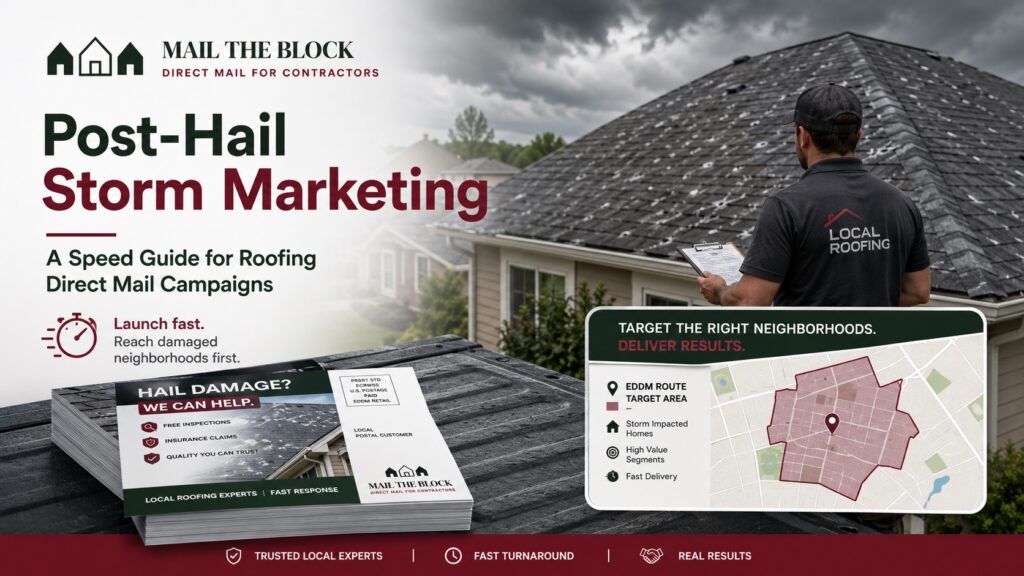
After a hail storm, roofers can launch a fast direct mail campaign by matching storm impact data with USPS EDDM carrier routes, updating pre-built storm postcards with local copy, printing compliant mailpieces, bundling by route, attaching facing slips, and dropping the campaign at the destination Post Office that serves the affected neighborhoods.
72-Hour Post-Storm Execution Timeline
| Timeline | Action | Goal |
|---|---|---|
| Within 12 hours | Isolate the impact zone and match postal routes | Identify damaged neighborhoods by hail path and carrier route |
| Within 24 hours | Deploy pre-built storm templates and insert local copy | Personalize the card by storm date, town, and county |
| Within 48 hours | Print compliant heavy cardstock with QR tracking | Send homeowners to a storm response landing page |
| Within 72 hours | Execute direct-to-destination Post Office drop-off | Get postcards into carrier workflows fast |
The 48-Hour Window: Why Speed Beats Budget in Storm Restoration Marketing
After hail or high winds, homeowners move from normal maintenance mode into protection mode. They worry about roof leaks, property value, insurance deadlines, and whether damage is visible from the ground.
That is the moment local roofers need to show up first.
Digital ads can become expensive fast when every roofing company starts bidding on storm damage roof repair, hail damage roof repair near me, and emergency roof repair. Direct mail gives roofers another route into the same neighborhood without depending only on volatile online ad auctions.
A postcard lands on the kitchen table. It stays visible. It feels local. It gives the homeowner a clear next step before out-of-state storm chasers flood the block with door knockers.
Mail The Block’s EDDM solutions help contractors move quickly with route-based postcard campaigns designed for local visibility.
Mapping the Swath: How to Turn Weather Radar Data into Postal Routes
The best roofing marketing campaign does not mail the whole county. It follows the storm path.
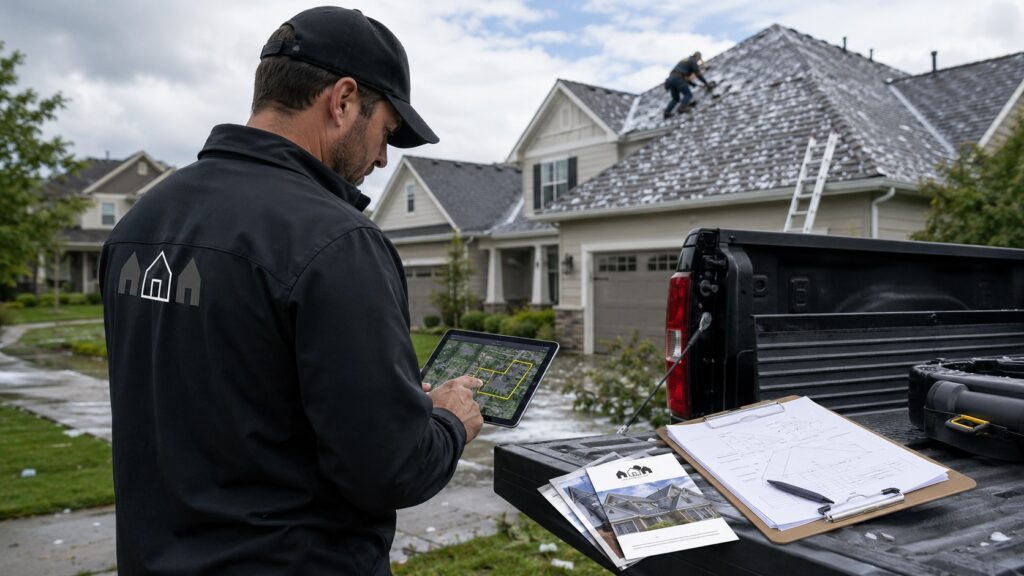
Start with hail reports, National Weather Service data, or a third-party hail tracking tool. Look for the strongest impact zone, especially areas with hail greater than 1 inch or damaging wind reports.
Then open the USPS EDDM route map and compare the hail swath against postal carrier routes. Prioritize:
- Single-family subdivisions
- Higher-value homes
- Neighborhoods inside the strongest hail path
- Routes with strong residential density
- Streets near past roof replacement projects
- Areas where crews can handle multiple inspections quickly
This turns weather data into direct mail postcards for roofers that reach the right houses, not random addresses.
Anatomy of a High-Converting Post-Storm Mailpiece
A storm postcard should feel urgent, local, and trustworthy.
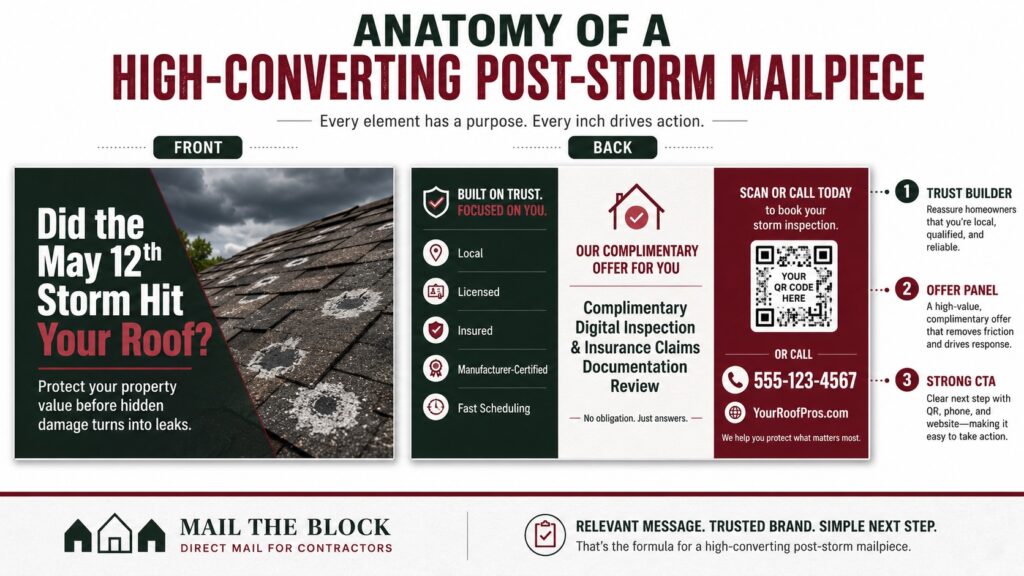
Front Side
Use a high-contrast image of hail damage, lifted shingles, granule loss, or a roof inspection in progress.
Headline Example:
Did the May 12th Storm Hit Your Roof?
Support Line:
Protect your property value before hidden storm damage turns into leaks.
Back Side
Build trust step by step:
- Local roofing company, not an out-of-state storm crew
- Licensed and insured
- Manufacturer-certified when applicable
- Digital roof inspection available
- Photo documentation provided
- Insurance claim support available
- Fast scheduling for affected neighborhoods
Stronger Offer
Avoid the generic “free estimate” pitch. Use a stronger restoration-focused offer:
Complimentary Digital Inspection and Insurance Claims Documentation Review
That wording tells homeowners that the roofer understands storm damage, photos, documentation, and insurance restoration leads.
For postcard layout support, see Mail The Block’s direct mail postcards marketing and campaign examples.
The Logistics of a Rapid Response Drop-Off
Speed depends on prep. The campaign should not start from a blank design file after the storm hits.
A fast workflow looks like this:
- Use a pre-built roofing storm template.
- Add the storm date, town, county, and local proof.
- Print USPS-compliant flats on sturdy cardstock.
- Add a QR code that leads to a dedicated page such as “Plainville Storm Response Center.”
- Bundle the mailpieces by route.
- Attach the correct facing slips.
- Drop the mail at the Post Office assigned to those carrier routes.
That last step matters. EDDM post office drop-off is not random. The USPS order identifies the correct destination Post Office for the selected routes. Dropping at the right location helps avoid unnecessary delays.
Turn Storm Damage Calls Into Local Roofing Leads
When a severe storm hits your market, your neighbors do not just need a roofer. They need an immediate, trusted local authority. Do not let out-of-state storm chasers push your company out of your own backyard.
Mail The Block specializes in fast EDDM printing, direct-mail campaign setup, and post-office logistics that help roofing contractors reach damaged neighborhoods before the competition settles in. Set up a pre-built storm response campaign with Mail The Block today through our pricing or contact pages.
Own the Storm Zone Before Someone Else Does
Post-hail storm marketing rewards speed, relevance, and local trust. Roofers that prepare templates, map storm swaths, target the right EDDM routes, and move postcards into the local mail stream within 48 to 72 hours can reach homeowners before panic becomes confusion.
For reputable local roofers, direct mail is not slow marketing. With the right process, it becomes a rapid-response neighborhood authority tool.